Cellular differentiation is the process by which a cell expresses certain genes to produce proteins characteristic for that type of cell.
Cellular differentiation allows a cell to carry out specialised functions.
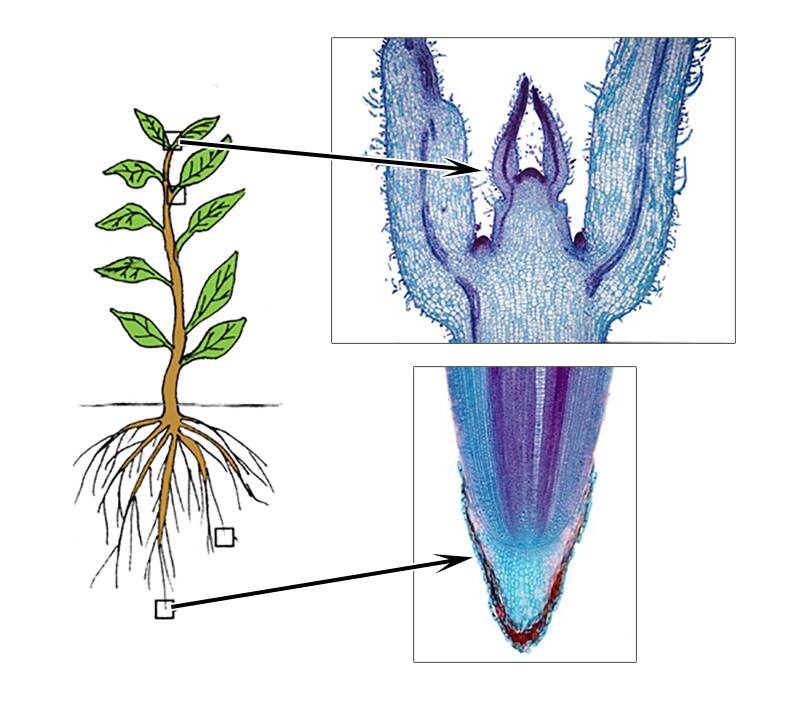
Differentiation into specialised cells occurs from meristems in plants.
Meristems are regions of unspecialised cells in plants that can divide (self-renew) and/or differentiate.
Meristem locations in plants
Differentiation into specialised cells occurs from embryonic and tissue (adult) stem cells in animals.
Stem cells are unspecialised cells in animals that can divide to self-renew and/or differentiate.
Cells in the very early embryo can differentiate into all the cell types that make up the organism and so are pluripotent.
All the genes in embryonic stem cells can be switched on so these cells can differentiate into any type of cell.
Tissue stem cells are involved in the growth, repair and renewal of the cells found in that tissue.
Tissue stem cells are multipotent.
Tissue stem cells are multipotent as they can differentiate into all of the types of cell found in a particular tissue type.
For example, blood stem cells located in bone marrow can give rise to all types of blood cell.
There are various different therapeutic and research uses of stem cells
Therapeutic uses involve the repair of damaged or diseased organs or tissues.
→ Stem cells are used in corneal repair and the regeneration of damaged skin.
Research uses involve stem cells being used as model cells to study how diseases develop or being used for drug testing.
→ Stem cell research provides information on how cell processes such as cell growth, differentiation and gene regulation work.
Stem cells from the embryo can self-renew, under the right conditions, in the lab.
There are various ethical issues regarding using embryonic stem cells.
→ Use of embryonic stem cells can offer effective treatments for disease and injury; however, it involves destruction of embryos.